Disclaimer: This information is for informational purposes only and should not be considered financial advice. The author assumes no responsibility for any investment losses incurred based on the information provided. Before making any investment decisions, you should conduct your own due diligence and consult with a qualified financial advisor.
Company Background
DouYu International Holdings Limited (NASDAQ: DOYU) is a leading game-centric live streaming platform in China, often referred to as the "Twitch of China."
Core Business:
Provides a platform for users to watch and engage with live streams focused on video games and other entertainment content.
Offers features like subscriptions, virtual gifting for streamers, and in-app purchases.
Generates revenue primarily from paying users and advertising.
Business model
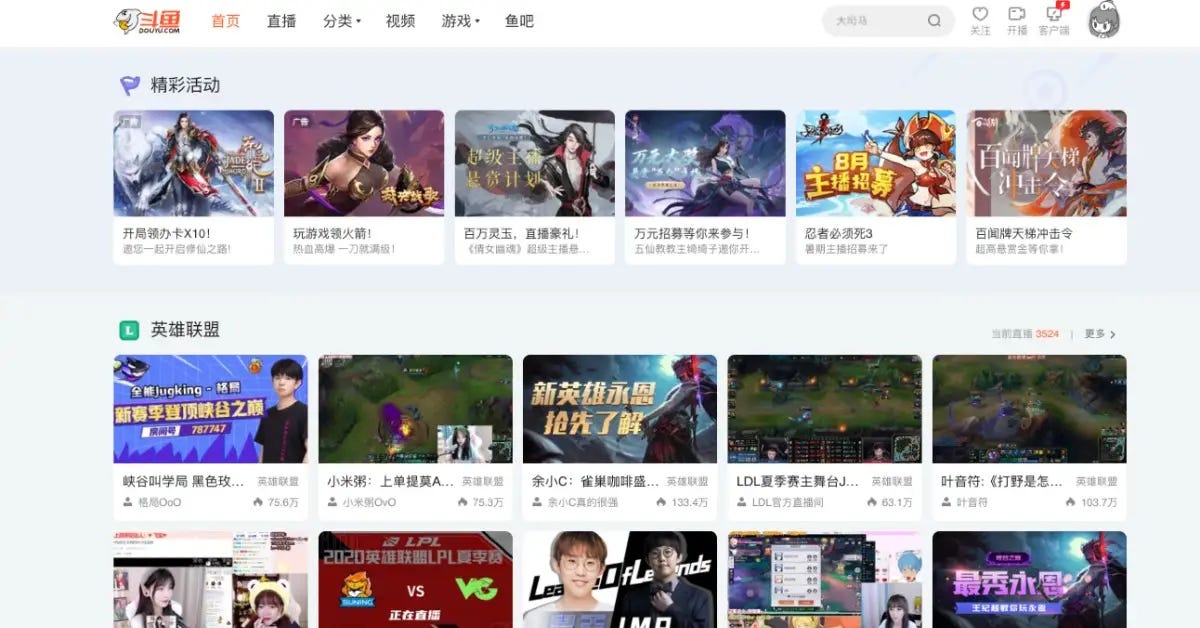
DouYu, the leading game-centric livestreaming platform in China, thrives on a model that connects gamers, streamers, and advertisers.
Value Proposition:
For Viewers (Gamers):
Discover and watch live streams of popular games and streamers.
Interact with streamers and other viewers through chat and virtual gifts.
Engage with a community of like-minded gaming enthusiasts.
For Streamers:
Broadcast their gameplay and connect with a large audience.
Monetize their content through subscriptions, virtual gifts from viewers, and brand sponsorships.
Build a fanbase and potentially gain recognition within the gaming community.
For Advertisers:
Reach a highly targeted audience of gamers through video ads and sponsored content integrations.
Leverage Douyu's platform to promote games, hardware, or other products relevant to gamers. Benefit from Douyu’s data insights on viewer demographics and behavior to tailor marketing campaigns.
Unit economics
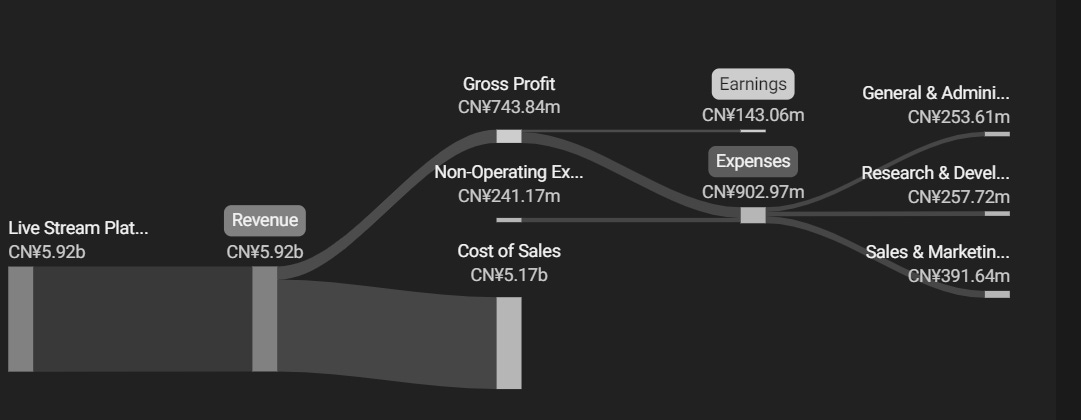
Revenue-
Live Streaming revenue (95%)
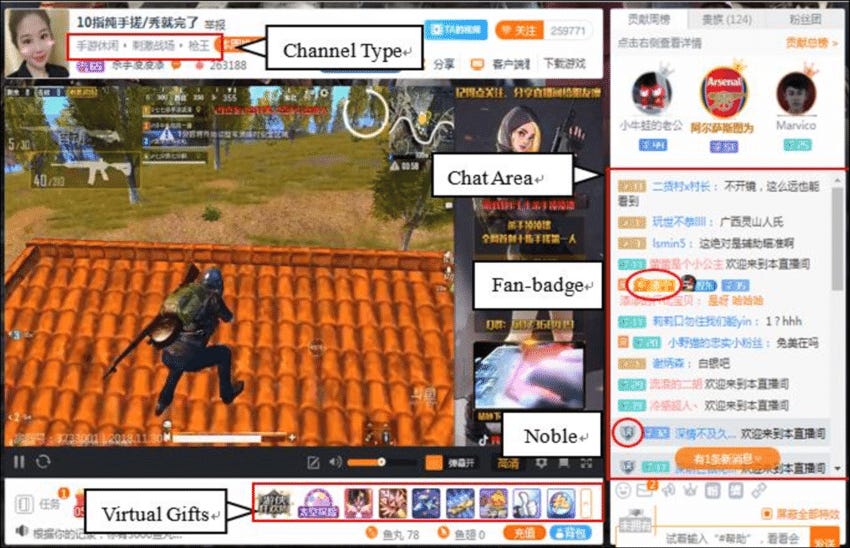
Virtual Gifts: This remains the dominant source, as you mentioned, accounting for a significant portion of the live streaming revenue (specific percentage unavailable). Viewers purchase these animated gifts to show appreciation to streamers, and Douyu takes a cut of the transaction. (80%)
Subscriptions: Douyu also offers subscription models where viewers pay a recurring fee to gain access to exclusive content or perks from their favorite streamers. This could include ad-free viewing, subscriber badges, special emotes, or even direct interaction with the streamer. Douyu likely takes a cut of these subscription fees as well, although the exact revenue split isn't publicly available. (20%)
Advertising and other revenue (5%)
Advertising: Brands pay Douyu to advertise on their platform, which can be displayed through banner ads, video ads, or even product placements within streams. This segment contributes a smaller portion of revenue compared to live streaming (around 2.68% of total revenue)
Cost of revenue (85% of revenue)
Revenue sharing fees and content cost (licensing fees)
Bandwidth cost
Total operating expenses (10-15% of revenue)
Sales and marketing expenses
marketing expenses for user acquisitions and branding expenses.
Research and development expenses.
new features like interactive tools, monetization options, or content moderation systems.
General and administrative expenses.
share-based compensation expenses and professional service fees.
As of December 31, 2021 and 2022, Douyu had 433.4 million and 471.8 million registered users on PC and mobile app
Total MAU users ( PC+ mobile is unknown) ( They stopped disclosing PC MAU users number in 2021 Q2). The Chinese government didn’t ban watching live streaming on PCs
Q2 2021- our PC MAU have remained relatively stable within the range of 110 million to 130 million. In the long run, we expected our mobile portal to be the primary driver for attracting users and generating revenue. As a result, we have decided to double disclosing our PC MAU starting from this quarter.
Competitor comparison
Premise for Opportunity
900 million in cash and cash equivalents + short term investments compared to a market cap of 230 million
Conservatively, net cash+ short term investments - all liabilities = 3x the current market cap
(fantastic discount or just too good to be true?)
Extra- Interest income- Douyu is earning about $11 million in interest quarterly or around 4.5% annually. $44 million yearly

If the business just breakeven, which is roughly what it’s doing now. Based on the yield alone, it’s a 19% return on the market cap.
Timing
There are strong indications that the gaming sector in China is poised for a rebound. Reports from market research firms like Newzoo or Niko Partners show rising gaming revenue, growth in esports viewership, and a surge in mobile game downloads. DouYu, as a leading live streaming platform for gaming content, is perfectly positioned to capitalize on this upswing. Its established user base and brand recognition within the Chinese market make it a prime beneficiary of this. Fundamentally, there is strong demand for gaming, and watching live streaming of gamers in China. I believe the Chinese government is not out to destroy the gaming sector but to make sure that it develops in a sustainable way and companies do not have overwhelming control over the gamer.
Growing market
Douyu is In a good market, long term market.The Games Live Streaming market in China is projected to reach a revenue of US$2.58bn in 2024. This indicates an expected annual growth rate (CAGR 2024-2027) of 8.99%, resulting in a projected market volume of US$3.34bn by 2027.
Value of their data
DouYu's data is a valuable asset that I think has value
Consumer Behavior Insights: DouYu's data offers a deep dive into gamers' minds, providing valuable insights into engagement patterns, genre preferences, and monetization habits. This information not only helps DouYu enhance its platform but also enables game developers to optimize their games for maximum engagement and revenue.
Informing Video Game Development: DouYu's data-driven approach allows game developers to create targeted game designs based on player preferences. By analyzing viewer behavior and predicting trends, developers can stay ahead of the curve and design games that resonate with their audience, leading to increased player satisfaction and revenue.
Beyond Gaming: DouYu's data extends its value beyond the gaming industry. It can be leveraged for targeted advertising, esports sponsorship opportunities, and market research, offering insights into consumer behavior and industry trends.
Potential for Broader Applications: As DouYu continues to refine its data collection and analysis capabilities, its data becomes an even more powerful tool for driving innovation and growth not only within the gaming ecosystem but also across various industries.
History of share buybacks
The initiation of a share buyback program, such as the recent Share Repurchase Program of $20 million announced by DouYu, is often viewed as evidence of good capital allocation by a company. Buying shares if you think the stock of your own company is undervalued is a good way to go.
Counterarguments/ Points for concern
Risks
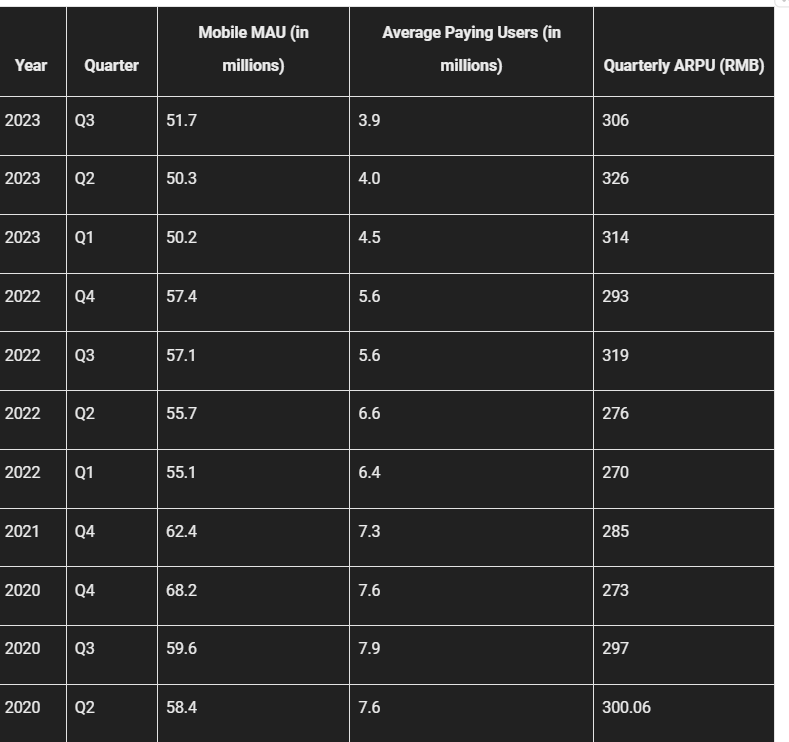
Notable decline in paying users and revenues in the past few years
Paying users is the cornerstone of DouYu's business model. Their virtual gifts, subscriptions, and in-app purchases generate the bulk of DouYu's revenue. A significant and sustained decline in paying users translates directly to a drop in revenue. Douyu’s focus has been about growth, and in the past paid high prices to acquire new users. Now, management said they are more concerned about sustainable growth and profitability. They have cut out a lot of costs but are still roughly breakeven as of now.
Paying users have declined a lot but total users stayed roughly the same. This might indicate that consumer preferences to the platform didn’t change much, and that users still find value in the platform. The problem- and quite a significant problem, is figuring out how to monetize the user base. Virtual gifts as a revenue stream might be quite dependent on the macroeconomic condition and how much their users are able to make themselves.
Complicated relationship with Tencent
Tencent's Benefits for DouYu:
Strategic Partnership: Tencent, a gaming and internet giant, owns a significant stake in DouYu. This translates to potential benefits for DouYu, including:
Access to Resources: Tencent's vast resources, expertise in online entertainment, and connections within the gaming industry could be invaluable for DouYu's growth.
Marketing and Promotion: Tencent's marketing muscle could help DouYu reach a wider audience and attract new users.
Collaboration Opportunities: Tencent's portfolio includes popular games and streaming platforms. Collaboration on content or features could benefit both companies.
Potential Negatives to Douyu:
Competition and Overlap: Tencent owns and operates its own streaming platform (Huya) in China. While DouYu and Huya might not directly compete in every aspect, there's an inherent overlap in their target audience and content. This could limit DouYu's growth potential if Tencent prioritizes its own platform.
Uncertainty of Tencent's Future Moves: Tencent's future plans regarding DouYu are unclear. They could choose to increase their stake, potentially leading to an acquisition or merger. Conversely, they might decide to reduce their involvement, leaving DouYu without a crucial strategic partner.
Regulatory Scrutiny: China's antitrust regulations might restrict Tencent's influence over DouYu. If forced to divest its stake, DouYu could lose the benefits of Tencent's partnership.
China's New Rules for Online Gaming: Curbing Time, Spending, and Content:
The Chinese government has implemented a series of regulations aimed at curbing what they perceive as negative aspects of the online gaming sector. Here's a summary of the key restrictions:
Playtime Limits for Minors:
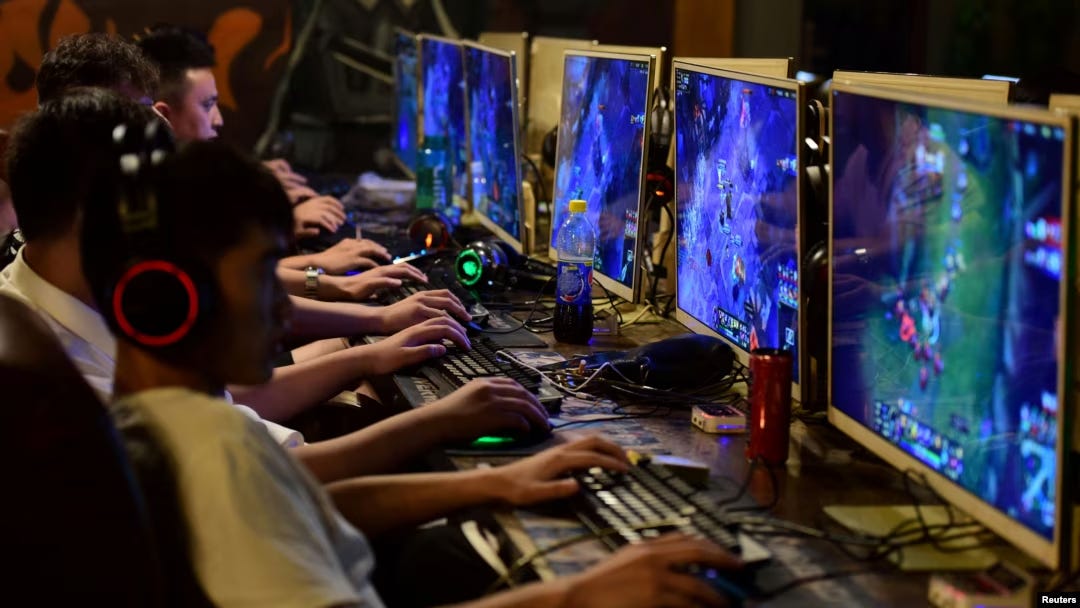
Strict limitations are placed on how much minors (under 18) can play online games. They are only allowed to play on public holidays, Fridays, Saturdays, and Sundays from 8 pm to 9 pm.
This significantly reduces playtime compared to previous regulations.
Reduced In-Game Spending:
Companies are prohibited from offering rewards or incentives for daily logins, first-time purchases, or consecutive spending sprees. This aims to curb impulsive spending and addictive behavior.
Limits might be placed on how much money a player can spend within a game.
Content Restrictions:
Games with content deemed "unhealthy" or promoting violence, gambling, or national disunity are not allowed.This enforces stricter content moderation for online games.
New Restrictions for Live Streaming Gaming Platforms in China:
Content and Game Choice:
Approved Games Only: Platforms can only broadcast officially approved video games. This restricts variety and potentially impacts viewership for platforms focused on unapproved titles.
"Healthy" Content Focus: Streamers must avoid content deemed "undesirable" and promote a "civilized and healthy" environment. This might limit violence, inappropriate language, or other content deemed unsuitable.
Additional Considerations:
Livestreamer Verification: Platforms might require real-name verification for streamers, potentially increasing government oversight.
Content Monitoring: Platforms face pressure to implement stricter content moderation to comply with government guidelines. DouYu might lose viewers who enjoyed content without moderation.
These regulations have and could lead to a significant decrease in viewership, user engagement, and overall revenue for DouYu. While DouYu might adapt and explore alternative monetization strategies, the short-term impact on their earnings is a significant concern for investors.
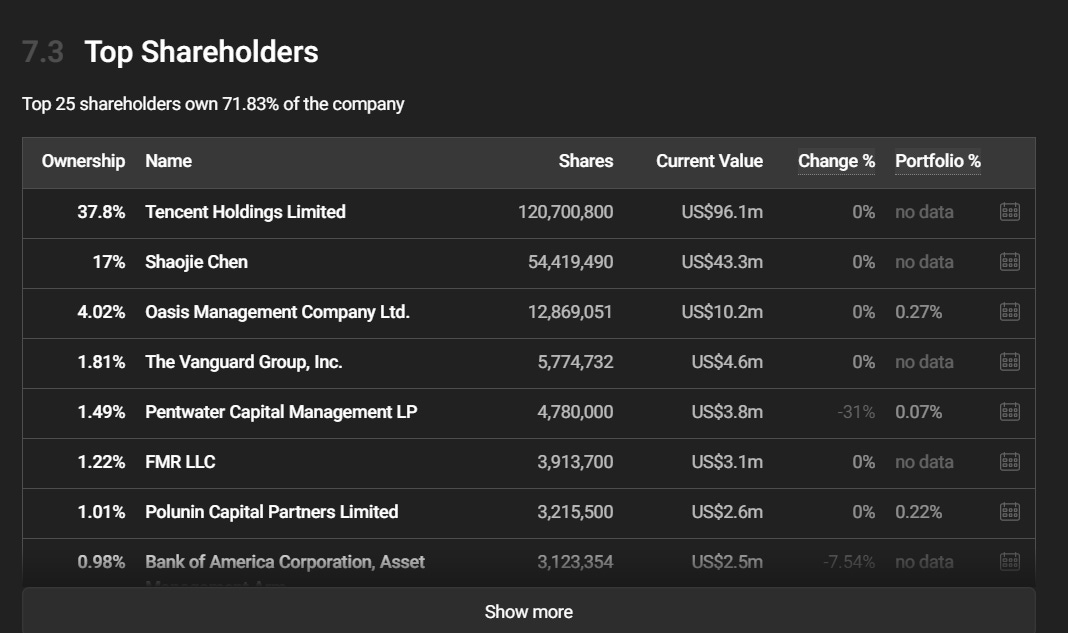
Government oversight China's top internet regulator dispatched a team of officials to oversee rectification to address problems including pornographic and inappropriate content on the platform, with DouYu said it will actively cooperate with inspection and guidance offered by officials from the local cyberspace administration of Central China's Hubei Province, and will carry out in-depth content rectification in accordance with regulatory requirements. Company CEO, Shaojie Chen, who owns 17.02% of the company, is suspected to be arrested.
(counterpoint) All of these additional regulations and restrictions make it harder for Douyu, but it also heavily increases the barrier to entry- you need to have licenses, approval, supervision etc etc. You have to be able to work very closely with the government. This can unintendedly limit future competition, because not a lot of startups and companies have the resources for that.
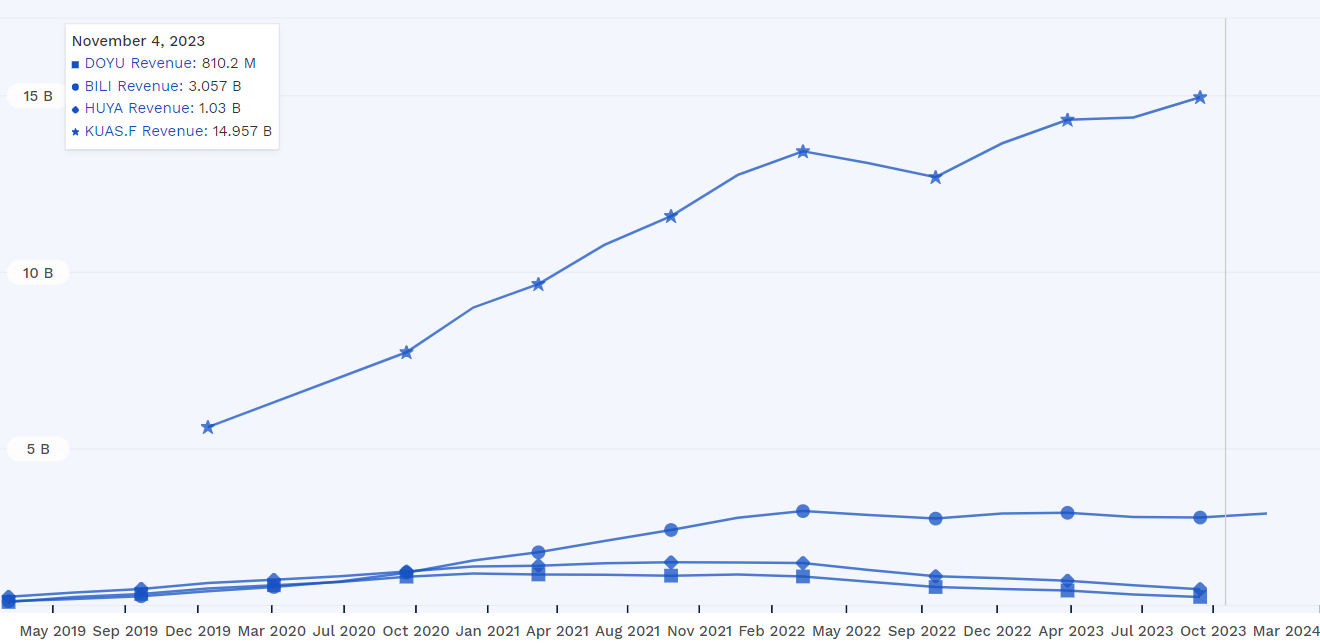
Douyu, like other media companies, are In a war for attention intense competition:
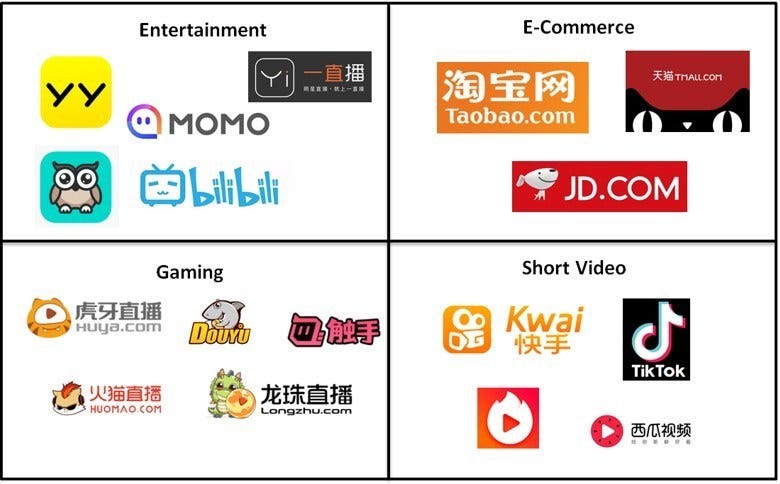
Netease, Tencent, compete for attention Huya ( tencent invested more into this), Douyin, bilibili, kuaishou
counterargument ( Huya and Douyu are more gaming focused)
Counter Argument:
It may seem that all live streaming and video companies compete in the same big market, but a counter argument would be that if we actually squint and see, it is composed of smaller, different markets.
Not all entertainment products are the same. Douyu has a niche of live streaming video games- the only major direct competitor is Huya. It is analogous to saying sports as an umbrella term, with basketball, football and badminton being lumped into one category. Each sport has its own nuances and details which in turn attracts different and unique audiences.
However, it is undeniable that the war for attention is very real. Content available has grown exponentially but the number of hours in a day is fixed- users will have to decide what they spend their time on- competition in this sense is very real.
Huya and Douyu control the overwhelming majority of the gaming live streaming market if I’m not mistaken.
Most of the other gaming live streaming companies have closed down or ceased operations.
When Tencent attempted to merge Douyu and Huya in 2020, the State Administration for Market Regulation killed the plan on concerns of monopolistic practices. At the time, Douyu and Huya controlled a combined 70 percent of the video game live-streaming mark
If anything, this is an indicator of the market power that both companies possess, to be considered a “monopoly” if they combined.
Tencent wanted to merge them when the combined price of the company was $5.3 billion. Since Tencent are good investors, this implied they are worth more than $5.3 billion. It would not be crazy to speculate that Tencent thinks Douyu is worth at least $1 billion.
Vie structure risk
Uncertain Regulatory Environment: VIEs exist in a legal grey area. The Chinese government's stance on VIEs can change, potentially impacting DouYu's ownership and control over its core business in China.
Enforcement Risks: There's a risk that Chinese authorities could challenge the validity of VIE agreements, jeopardizing DouYu's ability to access its profits generated in China.
Profit Repatriation Risk: If the Chinese government restricts DouYu's ability to transfer profits from the Chinese operating company to the WFOE, it could significantly impact DouYu's ability to return cash to shareholders.
Final thoughts
I think at this valuation, buying a stake in Douyu offers an attractive, asymmetric risk reward opportunity. Most of the problems imposed on Douyu are imposed by the Chinese government. While these problems are very real, I believe that at the end of the day, people would still want to watch livestreams of their favorite gamers. Consumer behavior may change as a result of the new restrictions and increased competition, but at this valuation, it implies people believe Douyu will burn and lose money equivalent to 4 times the amount of their current market cap- which I don’t see happening, barring any wildly improbable circumstances. The market is there to serve us, not to instruct us.
At the end of the day, we are getting paid ~3-4x the amount we paid, to own the livestreaming business.
Ownership breakdown